“Eat more fibre” is correct advice delivered in a form that often fails. Someone replaces white bread, adds bran cereal, eats a large bean salad and starts a fibre supplement in the same weekend. By Monday they are bloated, uncomfortable and convinced that fibre does not suit them.
The gut received four changes at once. The lesson is not that fibre is bad. The lesson is that dose, type, fluid and timing matter.
The FitFat AI 14-Day Fiber Ramp changes one layer at a time. It is for general education, not treatment of persistent constipation, abdominal pain or bowel disease.
Start with the safety boundary
Seek medical advice for blood in stool, black stool, unexplained weight loss, persistent vomiting, fever, severe or worsening abdominal pain, inability to pass stool or gas, new bowel changes that persist, or constipation associated with a new medication. Sudden bowel changes in later adulthood should not automatically be managed with more bran.
People with bowel narrowing, inflammatory bowel disease, swallowing difficulty, fluid restriction, kidney or heart failure, or a prescribed low-fibre diet need individual guidance.
Why gradual beats heroic
NIDDK advises adults to obtain roughly 22–34 grams of fibre daily depending on age and sex and to drink enough liquids to help fibre work. Those are general reference amounts, not a command to jump from a low intake to the top of the range overnight.
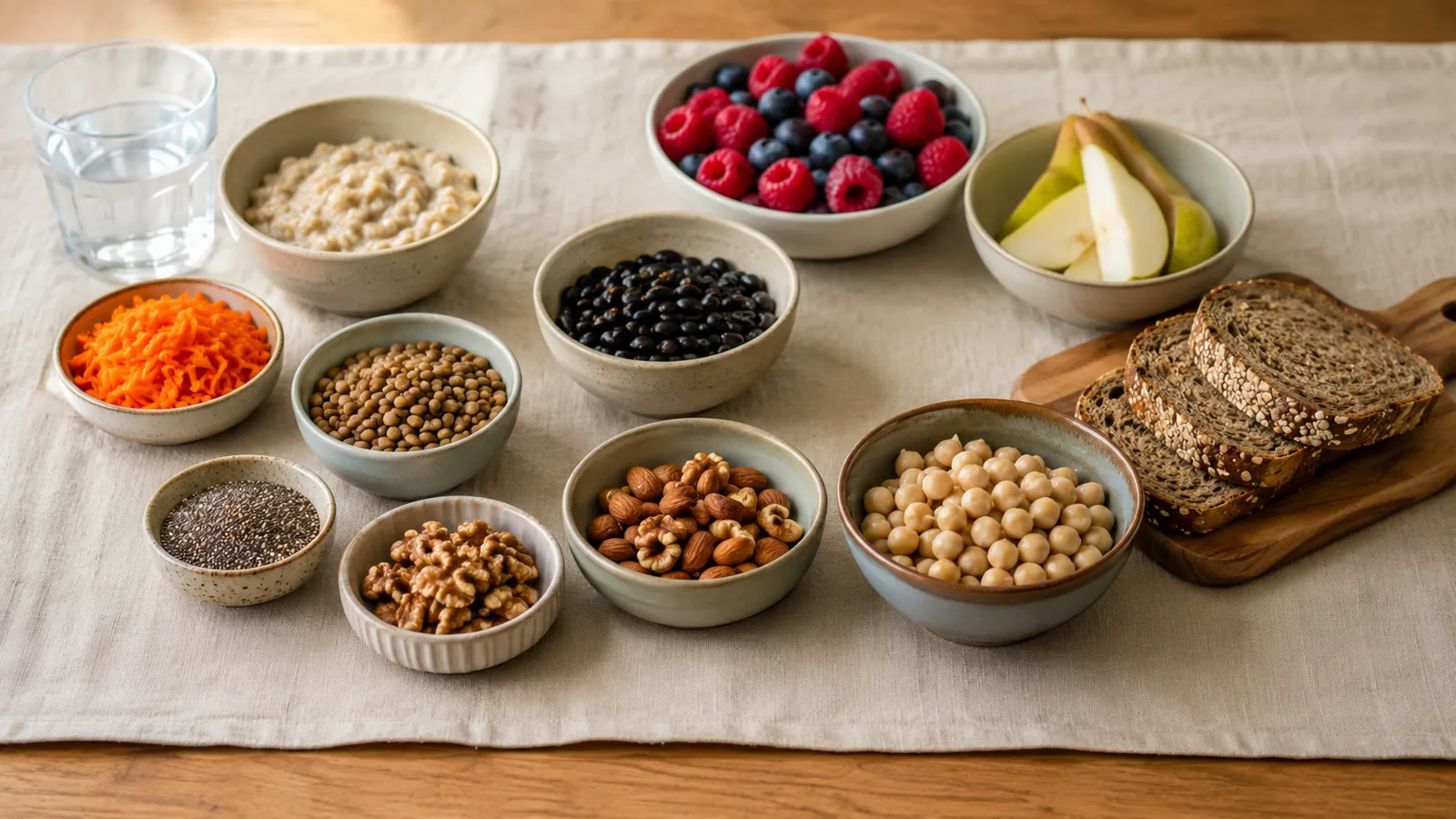
Different fibres behave differently. Oats, beans, fruit, vegetables, nuts, seeds and whole grains bring different textures and fermentable compounds. Variety is useful, but introducing multiple large servings simultaneously makes reactions difficult to interpret.
Days 1–3: observe before adding
Keep meals normal and record:
- main fibre foods eaten;
- stool frequency and ease;
- bloating or pain;
- approximate fluids;
- medications or supplements that may affect the bowel.
Do not diagnose yourself from one day. The purpose is to find the current baseline and the meal with the easiest opening.
Days 4–6: add one gentle anchor
Choose one repeatable addition:
- porridge oats at breakfast;
- one pear or a portion of berries;
- a small serving of cooked vegetables at dinner;
- whole-grain bread replacing one refined serving.
Keep the rest of the diet stable. Cooked produce can be easier for some people than an enormous raw salad. Chew well and maintain appropriate fluid intake.
Days 7–9: add a legume bridge
Introduce a modest portion of lentils, chickpeas or beans—perhaps two to four tablespoons—into a familiar meal. Rinse canned beans if desired. Do not begin with a restaurant-sized bean bowl.
Examples:
- lentils stirred into soup;
- chickpeas added to a salad you already tolerate;
- beans mixed with minced meat or tofu in a familiar dish;
- hummus as part of lunch.
If symptoms rise sharply, return to the last comfortable amount rather than declaring all legumes impossible.
Days 10–12: create two-source meals
Combine two ordinary sources without making either huge:
- oats plus berries;
- whole-grain toast plus beans;
- lentil soup plus vegetables;
- yogurt plus fruit and a small portion of nuts;
- potato with skin plus cooked greens.
This develops variety and distributes fibre across the day.
Days 13–14: audit the pattern
Ask four questions:
- Which addition was easiest to repeat?
- Which portion caused discomfort, and was it the food or the sudden quantity?
- Did fluids keep pace with the change?
- Is bowel function improving, unchanged or worsening?
Keep two successful anchors for the next week. There is no prize for completing every rung if symptoms are worsening.
The fluid partnership
Fibre and fluid advice is often reduced to “drink more.” Fluid needs vary, and indiscriminate extra water can be inappropriate with prescribed restrictions or certain medical conditions. The sensible principle is to avoid raising fibre sharply while fluid intake remains unusually low, and to follow individual advice where relevant.
Tea, coffee, milk and water-rich foods contribute to total fluid; plain water is not the only source. Alcohol is not a hydration strategy.
Food first, supplements second
Fibre supplements can be useful for some conditions, but different products have different evidence and effects. They can also interfere with medication timing or be unsafe with swallowing problems or obstruction risk.
Before adding one, clarify the goal with a pharmacist, dietitian or clinician. A supplement should not conceal a persistent change that needs assessment.
The comfort scale
Score the day from zero to three:
- 0: no meaningful change;
- 1: mild extra gas, daily activities unaffected;
- 2: uncomfortable bloating or changed appetite—hold the current rung;
- 3: pain, vomiting, marked distension or inability to pass stool/gas—stop and seek appropriate advice.
This scale does not diagnose a condition. It prevents the plan from treating every reaction as normal adaptation.
What success looks like
Success is not reaching a number in 14 days. It is leaving with two or three fibre-rich foods you tolerate, realistic portions, sufficient variety and a method for adding more slowly.
A strong diet is built from repeatable meals, not one heroic bowl of bran.
Sources
- NIDDK: Eating, Diet and Nutrition for Constipation
- NIDDK: Treatment for Constipation
- US Dietary Guidelines for Americans
- NHS: How to Get More Fibre Into Your Diet
Review note: Persistent or new bowel symptoms require appropriate assessment. This plan is general food education, not treatment. Reviewed August 24, 2026.
Reviewed under our editorial policy. Please also read our medical disclaimer.