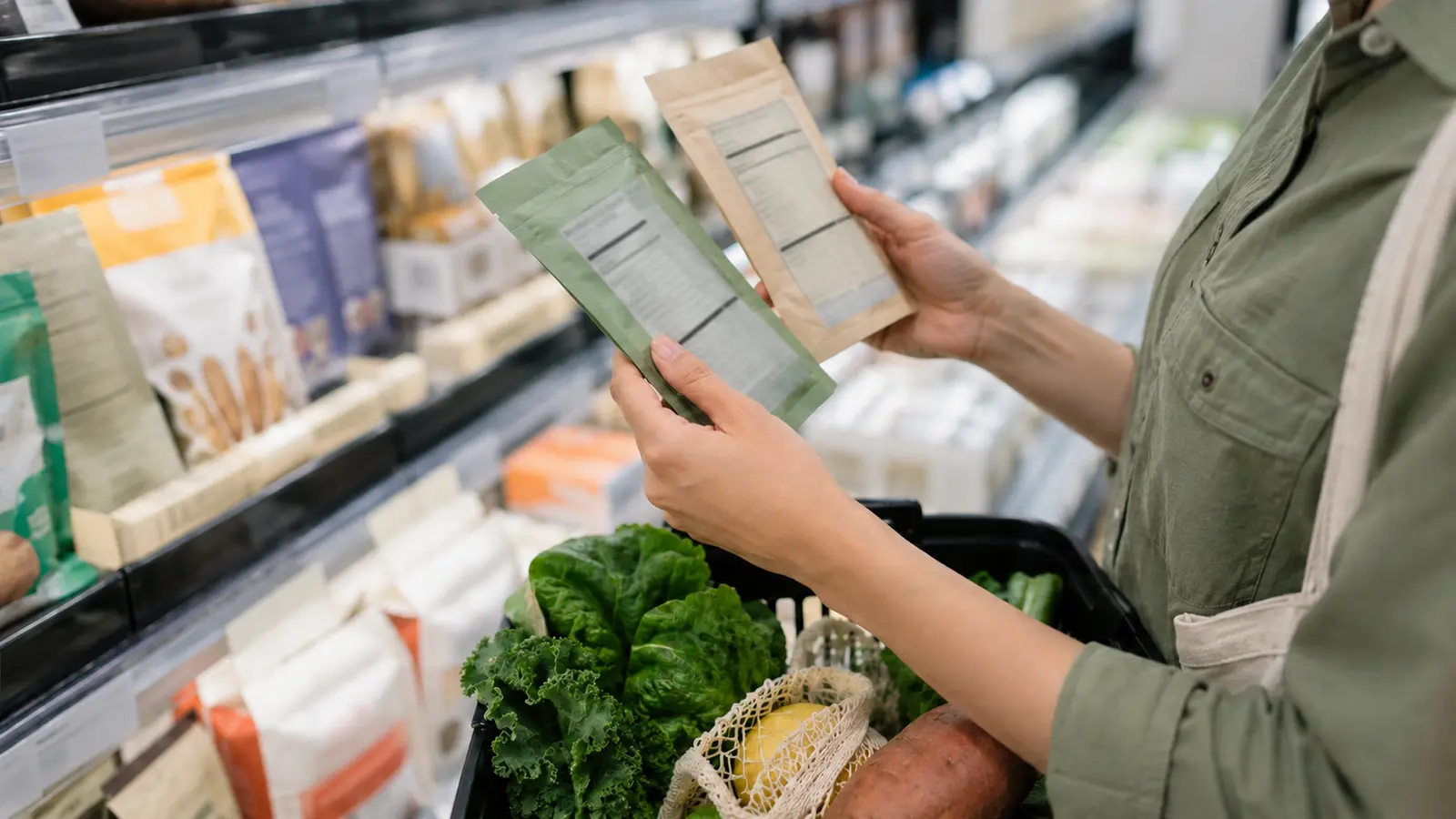
A nutrition label is most useful for comparing two foods you might actually buy. It is less useful as a scorecard for judging a single meal as good or bad. Read it in a consistent order and the panel becomes much easier to use.
Begin with serving size
Every number on the label refers to the stated serving. If a package contains two servings and you eat the whole package, the calories and nutrients are doubled. The serving listed is a standardized reference, not necessarily a recommendation for your body or appetite.
Compare similar products using similar amounts. One soup may appear lower in sodium simply because its serving is smaller.
Use percent Daily Value as a comparison tool
Percent Daily Value shows how much one serving contributes to a general daily reference diet. It is not a personalized target, but it helps identify foods that are relatively low or high in a nutrient.
The FDA's quick comparison rule treats 5% Daily Value or less per serving as low and 20% or more as high. That shortcut describes concentration per labeled serving; it does not declare the whole product healthy or unhealthy.
For many adults, useful comparisons include saturated fat, sodium, added sugars and fiber. Protein matters too, although a Daily Value may not always be displayed. Individual needs can differ substantially with kidney disease, diabetes, undernutrition or other conditions.
Separate total sugar from added sugar
Milk and fruit contain naturally occurring sugars. The added sugars line identifies sugar introduced during processing or preparation. Plain yogurt and sweetened yogurt may have similar-looking total sugar numbers but very different added sugar amounts.
Ingredients appear in descending order by weight. Sugar can appear under several names, so the dedicated added-sugars line is often quicker than hunting through the ingredient list.
Look at sodium across the whole day
Bread, sauces, soups, processed meats and ready meals can contribute sodium even when they do not taste intensely salty. Compare brands rather than assuming an entire category must be avoided. A modest reduction in frequently eaten foods can matter more than finding one perfect product.
Do not ignore the ingredient list
The nutrition panel tells you quantities; the ingredient list tells you what the food is made from. For bread and cereal, look for a whole grain near the beginning. For foods marketed as high-protein or natural, confirm that the ingredients and numbers support the front-of-package claim.
A short ingredient list is not automatically healthier, and a long one is not automatically harmful. The aim is an overall eating pattern centered on minimally processed, nutrient-dense foods, with packaged foods chosen thoughtfully.
A 60-second comparison method
When choosing between two similar products:
- make the serving sizes comparable;
- identify the one or two nutrients relevant to your goal;
- compare both the amount and % Daily Value;
- check added sugars separately from total sugars;
- review ingredients for allergens and the product's actual composition;
- choose based on the whole eating pattern, price and what you will realistically eat.
Do not compare unlike serving sizes or select a product because one favorable number is printed prominently on the front.
Claims we reject during editing
- “Serving size is the amount you should eat.” It reflects a labeled reference, not an individual prescription.
- “Five percent Daily Value means five percent of the package.” It refers to a nutrient contribution per serving.
- “Total sugar and added sugar are interchangeable.” Added sugars are included within total sugars.
- “Natural on the front makes the product nutritious.” Front claims do not replace the facts panel and ingredients.
- “The lowest-calorie product is automatically best.” Nutrition and individual goals cannot be reduced to one number.
Medical nutrition needs can differ in kidney disease, diabetes, food allergy, pregnancy, eating-disorder recovery and other contexts. This guide is educational, not an individualized diet plan.
Sources checked by our editors
- FDA: How to Understand and Use the Nutrition Facts Label
- FDA: Serving Size on the Nutrition Facts Label
- FDA: Daily Value and Percent Daily Value
- FDA: Added Sugars on the Nutrition Facts Label
Review note: Last checked August 24, 2026. Examples follow the current U.S. Nutrition Facts framework; label formats and reference values can differ by country.
Reviewed under our editorial policy. Please also read our medical disclaimer.