Walking is excellent activity, but “I walk, so my bones are covered” is incomplete. Bone responds to mechanical loading, and a familiar level walk may stop providing a novel signal even while it continues to benefit the heart, mood and general mobility.
That does not mean everyone over 50 should start jumping. Bone health, fracture history, balance, joint condition and medication change what is appropriate. The useful question is: Which loading signals can this person safely produce?
The FitFat AI Four-Signal Bone Map organises a week without promising that exercise alone prevents every fracture.
Signal 1: support body weight
Weight-bearing activity asks the skeleton to support the body against gravity. Walking, stair climbing and dancing are familiar examples. Swimming and cycling can be valuable cardiovascular activities, but they do not provide the same weight-bearing stimulus.
If you are inactive, regular walking is a meaningful first signal. Progress might mean a slightly brisker pace, gentle hills or more frequent sessions—not automatically running.
Signal 2: pull through muscle
Muscle contraction loads bone where tendons attach. Progressive resistance training therefore contributes a different signal from steady walking.
Useful patterns include:
- sit-to-stand or squat to a chair;
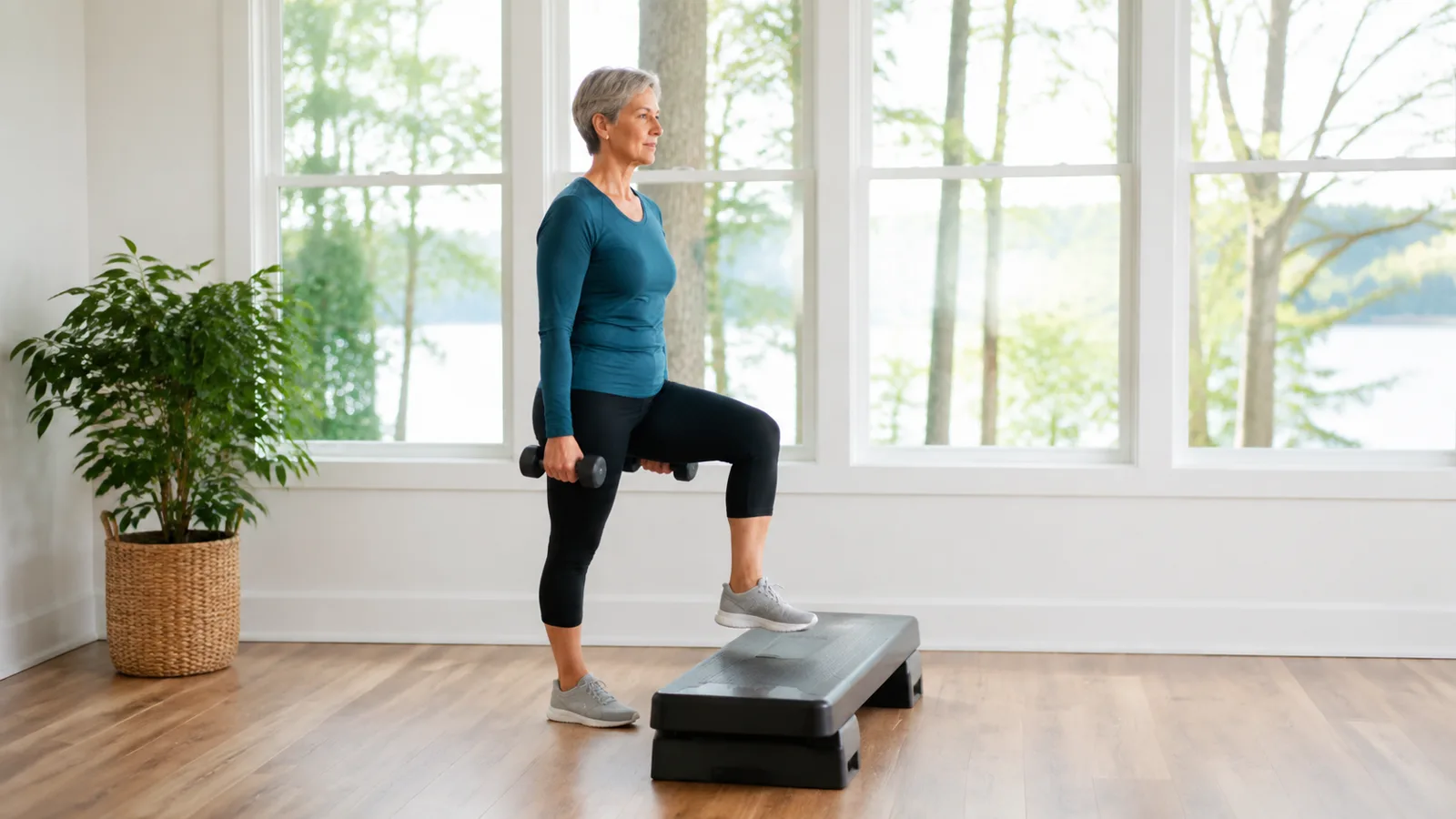
- step-up;
- hip hinge with a light weight;
- supported row;
- wall or counter push-up;
- loaded carry where appropriate.
The resistance must eventually be challenging enough to require adaptation, but “heavy” is relative. Technique and progression matter more than copying another person's dumbbell.
Signal 3: vary direction and speed
Bones adapt to habitual loading. Carefully changing direction, tempo or impact can create a less familiar signal. Examples range from side steps and dancing to small hops—but the menu changes dramatically with fracture risk.
International Osteoporosis Foundation guidance notes that mixed loading approaches can help limit bone loss. Higher-impact work is not universally safe. People with vertebral fractures, multiple fragility fractures, significant osteoporosis, poor balance or painful joints need individual guidance before adding jumps, rapid twisting or loaded spinal flexion.
For many beginners, a safe directional progression is simply:
- forward walking;
- side steps while holding a counter;
- controlled step-ups;
- gentle changes of direction in an open space.
Signal 4: protect the landing system
Fracture prevention is not only about bone density. Balance, leg strength, vision, medication, footwear and home hazards influence whether a fall occurs and how it happens.
Balance training—such as supported tandem stance, weight shifts and controlled step-overs—does not directly replace bone loading, but it protects the system delivering that load. CDC's STEADI framework emphasises this multi-factor view.
Build a four-signal week
An example for a generally active person might look like:
- Monday: resistance session with chair rises, rows, step-ups and carries;
- Tuesday: purposeful weight-bearing walk plus supported side steps;
- Thursday: second resistance session;
- Saturday: walking on varied but safe terrain or dancing;
- Most days: two minutes of balance practice near support.
This is a template, not a prescription. Someone with osteoporosis, recent fracture or significant pain may need a substantially different version.
The bone-safety screen
Before increasing impact or spinal loading, ask:
- Have I had a fracture from a minor fall or ordinary movement?
- Have I been diagnosed with osteoporosis or very low bone density?
- Have I lost height or developed unexplained back pain?
- Do I take medication or have a condition that affects bone health?
- Can I balance confidently enough for the proposed movement?
A yes answer does not mean “do not exercise.” It means the exercise menu should be selected with appropriate clinical input.
Progress the signal, not the spectacle
Progressive loading can mean:
- one additional controlled repetition;
- a slightly heavier object;
- a lower chair;
- one extra set;
- a more purposeful walking pace;
- a direction change with reliable support.
Jump height, speed and exhaustion are poor universal progress markers. The smallest change that remains repeatable is usually enough.
Nutrition and medication still matter
Exercise is one part of bone health. Adequate calcium, vitamin D, protein and overall nutrition matter; smoking and excessive alcohol can add risk. People prescribed osteoporosis medication should not replace it with exercise or supplements without medical advice.
No exercise programme can guarantee a fracture will not occur. Evidence supports benefits for bone mineral density, strength and falls-related factors, while direct fracture outcomes are more difficult to study.
A stronger conclusion than “just walk”
Keep walking if it suits you. Then ask whether the week also contains muscle pull, safe variation and balance protection. Those four signals create a more complete plan than repeating one activity and hoping it covers every system.
Sources
- International Osteoporosis Foundation: Exercise
- International Osteoporosis Foundation: Exercise Depending on Age
- CDC STEADI: Older Adult Fall Prevention
- WHO: Physical Activity and Sedentary Behaviour
- NIH/PMC Review: Effects of Resistance Exercise on Bone Health
Review note: Diagnosed osteoporosis, fragility fractures and unexplained back pain require individual guidance before impact or loaded spinal exercise. Reviewed August 24, 2026.
Reviewed under our editorial policy. Please also read our medical disclaimer.