Falls are common, but they are not an unavoidable part of aging. The useful question is not whether a home looks tidy; it is whether someone can move through it when sleepy, hurried, carrying something or having a less steady day.
A home check works best when you walk the normal routes: bed to bathroom, chair to kitchen, front door to street. Look for anything that demands an unexpected step, reach or turn.
Hallways and living areas
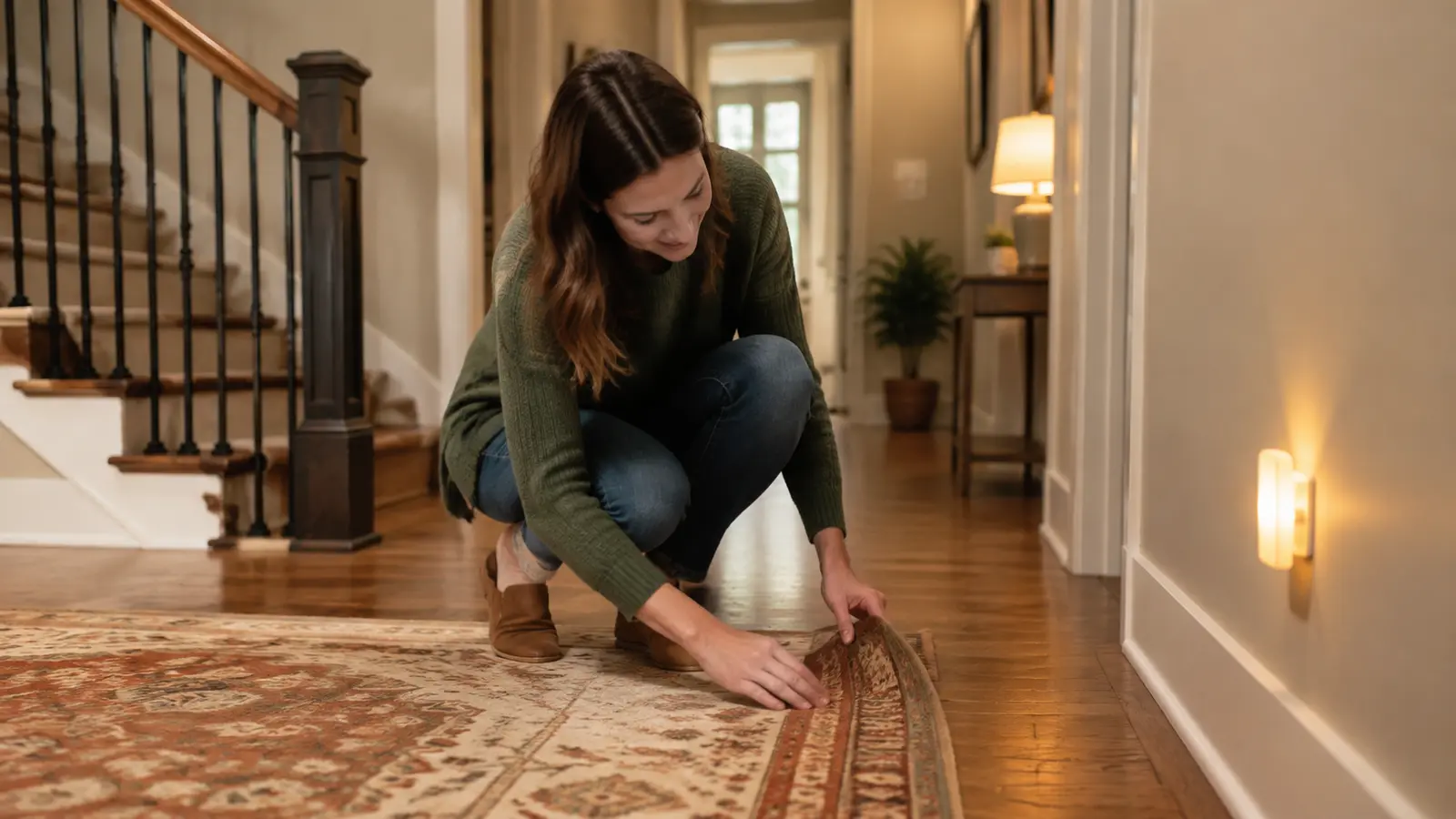
Create a clear walking path wide enough to use without turning sideways. Move electrical cords away from routes and secure or remove loose rugs. A rug that has never caused trouble can still become a hazard when footwear, lighting or balance changes.
Keep frequently used items between waist and shoulder height. Reaching from an unstable chair is not a safe substitute for a proper step stool with a handhold. Chairs should be stable and high enough that standing does not require a sudden forward lunge.
Stairs and entrances
Stairs need consistent lighting, visible edges and a secure handrail. Do not store objects on steps, even temporarily. Repair loose boards or uneven surfaces and keep outdoor entrances clear of wet leaves, ice and other slipping hazards.
If vision makes the first or last step difficult to judge, contrasting tape may improve visibility. A light switch at both ends prevents walking through darkness to reach the control.
Bathroom
Water, turning and low seats make the bathroom a priority. Use a non-slip surface in the bath or shower. Properly installed grab bars are designed to bear weight; towel rails are not. A shower chair and handheld shower head may help someone who becomes tired or unsteady while washing.
Consider whether the route to the toilet is lit at night. A small motion-activated light can be more useful than relying on memory in the dark.
Bedroom and footwear
Keep a lamp and, if needed, glasses or a walking aid within easy reach. The bed should allow the feet to reach the floor when sitting at the edge. Avoid walking in loose socks or backless slippers on smooth floors; secure, well-fitting footwear usually provides a more predictable base.
The medical side of fall prevention
Home changes are only one part of prevention. Vision, foot problems, low blood pressure, weakness and some medicines can affect balance. Tell a healthcare professional about a fall, even if there was no serious injury. A medication and vision review can reveal risks that no amount of tidying will fix.
Balance and strength practice can also help. Use stable support and choose exercises appropriate to your current ability rather than testing yourself with unsafe challenges.
Prioritize instead of buying everything
Start with routes used every day and hazards linked to an actual difficulty or previous near-fall. Some changes require a landlord, electrician, occupational therapist or properly installed equipment. A grab bar that is badly anchored can create false confidence.
The CDC's STEADI approach is broader than a room checklist: screen for fall risk, assess modifiable factors and intervene appropriately. Home modification is one component among exercise and clinical interventions.
Claims we reject during editing
- “Falls are inevitable with age.” Risk can often be reduced.
- “Removing rugs solves fall risk.” Vision, medication, blood pressure, feet, strength and balance may also matter.
- “A towel rail works like a grab bar.” It is not designed as weight-bearing safety equipment.
- “Someone who did not get hurt does not need to mention a fall.” A fall or repeated near-fall can reveal modifiable risk.
- “The most expensive equipment is automatically safest.” Selection and correct installation matter.
This checklist is educational and cannot certify that a home is safe or replace an individualized occupational or clinical assessment.
Sources checked by our editors
- CDC STEADI: Patient and Caregiver Resources
- CDC: Facts About Falls
- CDC: Compendium of Effective Fall Interventions
Review note: Last checked August 24, 2026. The article adapts CDC hazard themes but does not reproduce or replace the complete STEADI materials.
Reviewed under our editorial policy. Please also read our medical disclaimer.