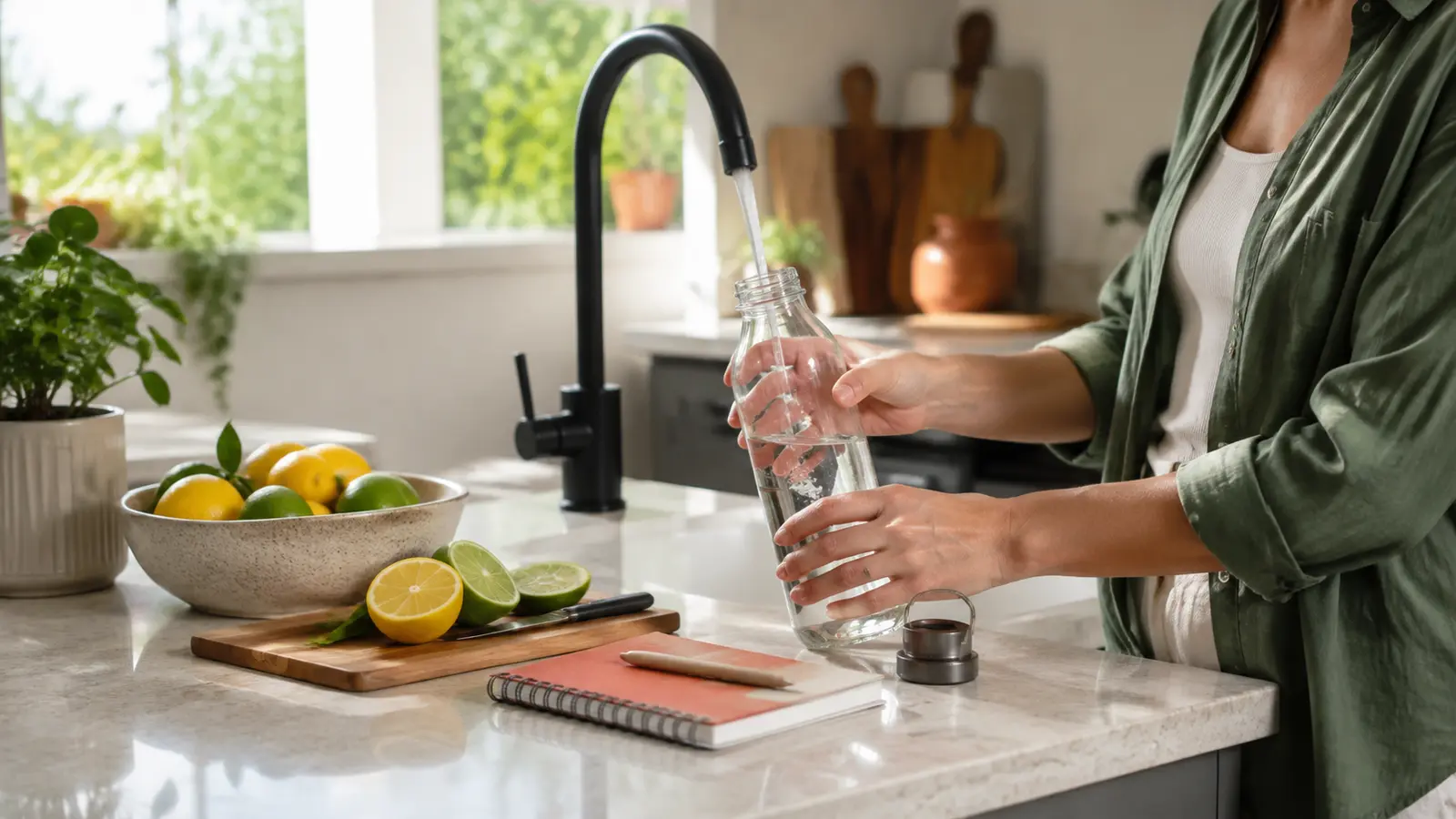
Online hydration advice often turns a complicated biological need into one commanding number: eight glasses, two liters or a gallon every day. The problem is not that these quantities are always wrong. It is that none can be correct for every adult, in every climate, during every activity and under every medical condition.
Water supports temperature regulation and normal body function, but it comes from more than a bottle. Drinking water, other beverages and food all contribute to total water intake. Fluid loss also changes with heat, exercise, fever, vomiting and diarrhea.
This guide explains how to interpret reference values without treating them as personal prescriptions.
“Total water” is not the same as plain drinking water
The National Academies established adequate intake values for total water, including water from food and all beverages. Its often-quoted reference levels—3.7 liters a day for adult men and 2.7 liters for adult women—describe healthy, sedentary people in temperate climates and include food moisture. They are not instructions to drink that volume as plain water.
They are also population reference values based partly on observed intake, not a threshold at which every individual suddenly becomes hydrated. The original report notes that thirst and drinking with meals are generally sufficient for average healthy people under ordinary conditions.
Why individual needs move
Fluid needs may rise or change with:
- heat and humidity;
- longer or more intense physical activity;
- fever, vomiting or diarrhea;
- pregnancy or breastfeeding;
- altitude and travel conditions;
- the amount of water supplied by food;
- medicines that change fluid balance;
- kidney, heart, endocrine or other medical conditions.
Age is one factor, not the identity of the article. Older adults can face increased dehydration risk, but younger adults are not immune—particularly during illness, heat exposure or prolonged activity.
A practical routine without pretending to calculate your body
For an adult without a prescribed fluid restriction or specialized medical plan, a simple routine may be more useful than repeatedly chasing a large number:
- Make a drink accessible during the parts of the day when you commonly forget.
- Include a beverage with meals.
- Plan for additional access during heat, travel and activity.
- Notice meaningful changes from your usual thirst, urination, symptoms and environment.
- Adjust the routine rather than forcing a huge volume late at night.
Plain water is a practical, calorie-free default. The CDC also recognizes unsweetened tea, coffee, sparkling water and certain nutrient-containing drinks as options. The nutritional consequences still matter: a drink can supply fluid while also containing substantial sugar, alcohol or calories.
Urine color is a clue, not a laboratory test
Dark yellow, strong-smelling urine and urinating less often can accompany dehydration. However, urine color can also be affected by medication, supplements, food and medical conditions. A single glance cannot diagnose hydration status.
Look at the pattern and the context. Thirst, dry mouth, headache, tiredness and light-headedness may occur with dehydration, but they are not specific to it. Persistent or concerning symptoms deserve appropriate medical assessment instead of an internet self-diagnosis.
When “drink more water” can be the wrong advice
Some people with kidney disease, heart failure, low blood sodium or other conditions may receive an individualized fluid limit. Certain endurance situations also require a plan that considers both fluid and electrolyte losses. General articles must not override those instructions.
Excessive water consumption can be harmful. Drinking large volumes faster than the body can handle may dilute blood sodium, a potentially serious condition. This is another reason we reject challenges that reward forcing a gallon or more regardless of thirst, activity, body size or medical history.
Illness and rehydration are different problems
Vomiting and diarrhea can cause loss of water and electrolytes. When losses are significant, plain water alone may not be the appropriate replacement. Official NHS guidance advises asking a pharmacist about oral rehydration solutions in relevant cases.
Small sips may be more manageable when nausea makes drinking difficult. Inability to keep fluids down, worsening weakness, persistent dizziness on standing, rapid breathing or heart rate, confusion, unusual drowsiness or very low urination can require prompt medical help. Follow the urgent-care instructions where you live.
Claims we would not publish as established fact
- “Everyone needs exactly eight glasses.” Individual need and total water sources differ.
- “Coffee does not count at all.” Coffee contains water, although caffeine and the drink's other ingredients remain relevant.
- “Clear urine is always the goal.” Constantly colorless urine is not a universal target.
- “More water automatically causes fat loss.” Hydration is not a stand-alone fat-loss treatment.
- “A gallon challenge detoxes the body.” This is unsupported marketing language and can encourage unsafe intake.
- “Electrolyte drinks are necessary for every workout.” Need depends on the person, conditions, duration and losses.
A seven-day observation—not a hydration competition
For one week, record only the situations in which drinking is difficult or needs change: a long commute, hot workplace, exercise session, illness or missed meal. Then solve the access problem—such as carrying a suitable bottle or placing a drink near a regular task.
The aim is not to display the largest intake. It is to build a routine responsive to context without overriding thirst, symptoms or professional instructions.
This article provides general education for adults and does not calculate an individual fluid prescription or replace medical care.
Sources checked by our editors
- National Academies: Dietary Reference Intakes for Water, Potassium, Sodium, Chloride, and Sulfate
- CDC: About Water and Healthier Drinks
- NHS: Dehydration
- CDC: Heat and hydration guidance
Review note: Last checked August 24, 2026. Numerical reference values are identified as total-water population estimates, not universal plain-water prescriptions. Warning signs are described as possible indicators rather than diagnoses.
Reviewed under our editorial policy. Please also read our medical disclaimer.