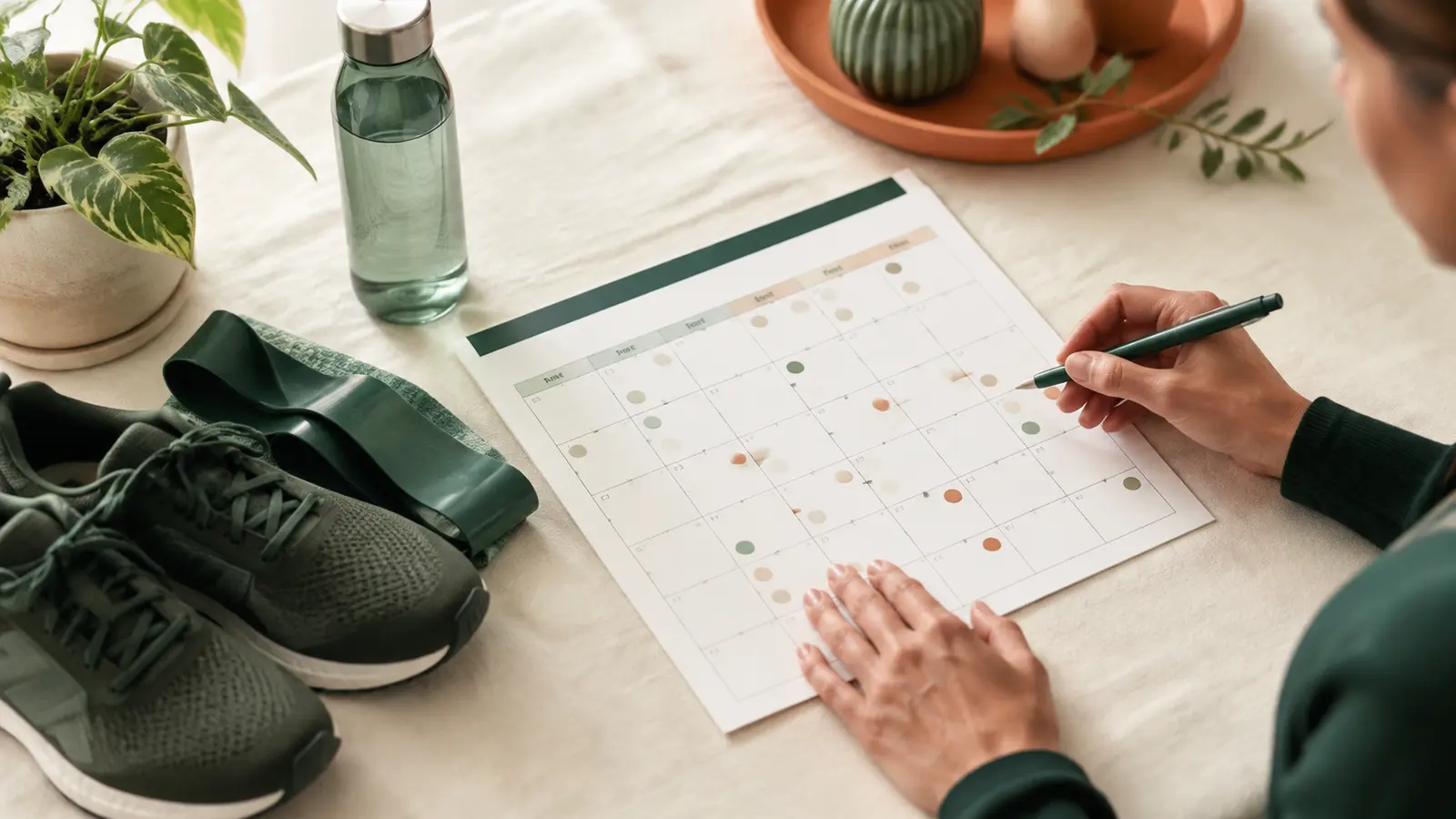
An effective activity week does not need to look athletic. Adults benefit from different types of capacity: aerobic endurance, muscular strength and—in older adults or others who need it—balance practice. Trying to train all of them hard in one session often produces a calendar that is difficult to recover from or repeat.
WHO guidance recommends 150–300 minutes of moderate aerobic activity per week, or the vigorous equivalent, plus muscle-strengthening work on at least two days for adults. Older adults should additionally include varied multicomponent activity emphasizing functional balance and strength on three or more days. These are long-term population recommendations, not an entrance exam.
Start from your current week
Before adding exercise, write down what you already do. Shopping on foot, gardening, dancing and brisk housework may count as movement. Then identify what is missing. A regular walker may need strength and balance practice; someone who lifts weights may still need more easy aerobic activity.
Use the talk test for moderate intensity: you should be able to speak in sentences, but the effort should feel more purposeful than a stroll. Your personal moderate pace depends on your fitness and health.
A gentle example week for an adult beginner
This template is a starting point, not a prescription:
- Monday: 15–25 minute walk plus five minutes of supported balance practice.
- Tuesday: 20 minutes of basic strength movements such as chair stands, wall push-ups, band rows and light carries.
- Wednesday: easy movement or recovery, perhaps a relaxed walk and normal daily activity.
- Thursday: 15–25 minute walk, ending with a few minutes at a slightly quicker but conversational pace.
- Friday: repeat the strength session, leaving at least two comfortable repetitions in reserve.
- Saturday: an enjoyable activity such as dancing, swimming, gardening or a longer social walk.
- Sunday: recovery and a brief balance routine near a stable support.
Short sessions can be useful. Ten minutes in the morning and ten later may fit real life better than a single block. Consistency matters more than creating a perfect calendar.
Progress one variable at a time
Add time before adding speed. If this week feels manageable, add around five minutes to one or two walks next week. For strength work, improve control and range before using more resistance. Avoid increasing duration, intensity and resistance all at once.
Normal effort can include warmth, faster breathing and temporary muscle tiredness. Stop and seek medical guidance for chest pressure, fainting, severe or unusual breathlessness, or pain that is sharp or worsening. New swelling, repeated falls or a major change in exercise tolerance also deserves assessment.
People with chronic conditions can often be active, but may need an adapted plan. A clinician or qualified exercise professional can help after recent surgery, serious illness or a period of repeated falls.
The weekly total is not the only metric
Track whether sessions happened, recovery remained acceptable and ordinary activities became easier. A schedule that reaches a numerical target but repeatedly aggravates symptoms is not successful. A shorter starting week can still be useful when it supports gradual progress.
Claims we reject during editing
- “Everyone needs the identical seven-day split.” Work, disability, recovery and goals differ.
- “Only gym exercise counts.” Walking, transport, work and recreation can contribute to physical activity.
- “Missing 150 minutes means no benefit.” WHO states that some activity is better than none.
- “Walking covers every requirement.” Strength and balance are separate capacities.
- “More intense is always healthier.” Appropriate dose and recovery matter.
This example is general adult education and is not a personalized training, rehabilitation or medical-clearance plan.
Sources checked by our editors
- WHO: Guidelines on physical activity and sedentary behaviour
- WHO: Physical activity fact sheet
- U.S. Physical Activity Guidelines for Americans
Review note: Last checked August 24, 2026. The weekly calendar is a FitFat AI example; the public-health targets come from the linked guidance.
Reviewed under our editorial policy. Please also read our medical disclaimer.